
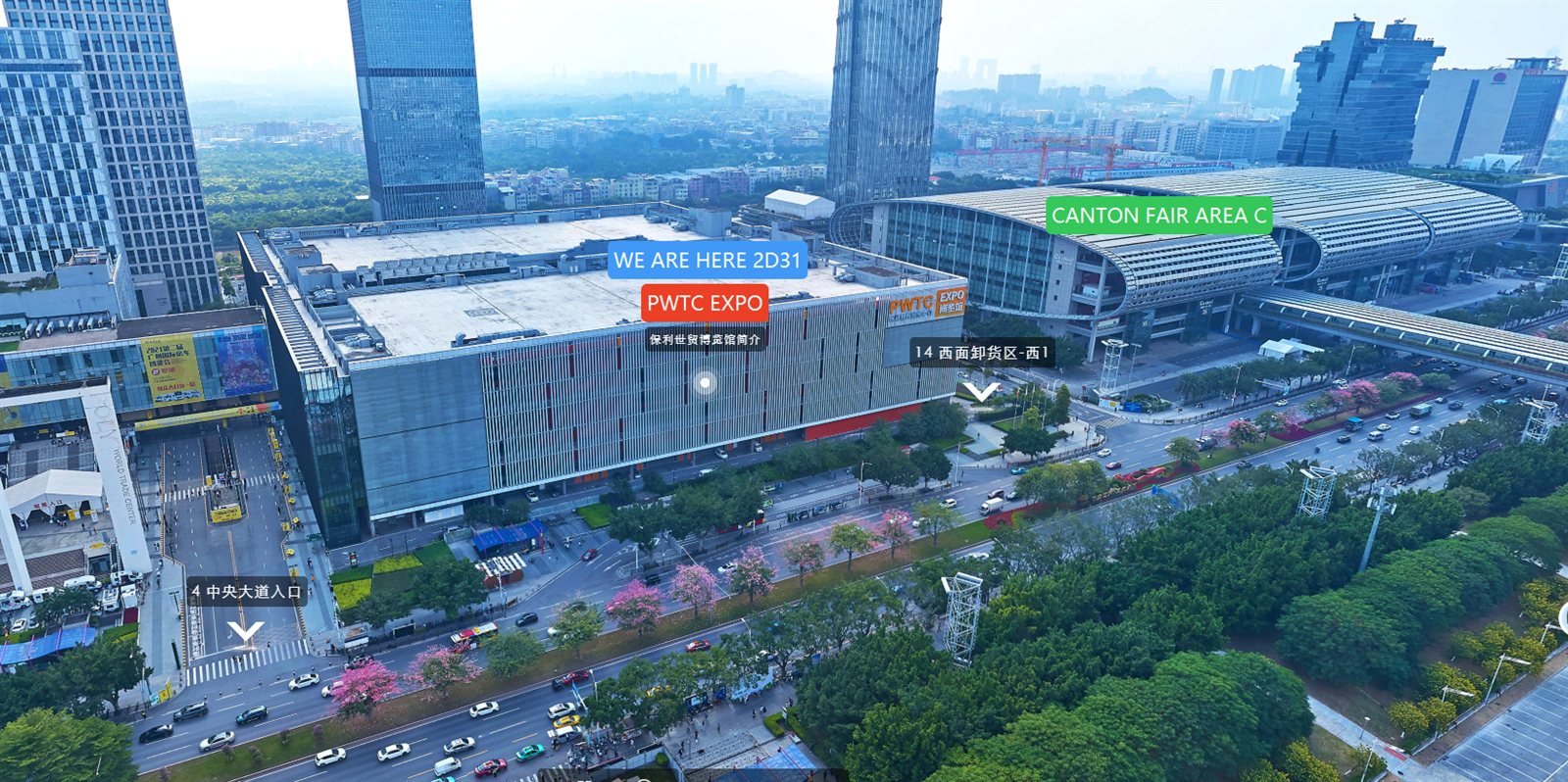
Fair season in Guangzhou runs on two clocks: the Canton Fair itself, and the satellites around it. From 31 October to 2 November 2026 we stood at booth 2D31 in the Poly World Trade Centre Expo (PWTC), four to six minutes on foot from Canton Fair Area C — close enough that buyers walked over between halls, notebooks in one hand and garment samples in the other.
We wrote down every question that came up more than twice. Five of them repeated across all three days. Day one and day three carried the traffic; on day two our team was inside the Canton Fair complex itself, which is its own data point — the buyers at PWTC were the ones who had already done the halls.
If you are planning a sourcing trip to Guangzhou, this is less a show report than a list of what apparel buyers are actually asking manufacturers for this season — and the answers we give, in writing, below.
The short version
- MOQ was the first question out of almost every buyer — but the conversation that mattered was always the second half: MOQ per style, per colour, and what happens below 300 pieces.
- Quoting clustered around four categories: light-luxury jackets, winter padded coats, cooling T-shirts and lightweight summer knits — winter and summer asked for in the same afternoon.
- The strongest buyers did not ask for a catalogue. They pointed at a style and changed it on the spot — length, fabric, trims — with the details written down before they left the stand.
- One buyer asked for DDP before he asked for a price. Terms are now part of the first conversation, not the last.
- Central Asia was the loudest signal: Russian-language signage on our own stand was not decoration — five to six Kazakh buyers finished at the stand and walked straight to our apM showroom the same day to see the full range.
Who actually came
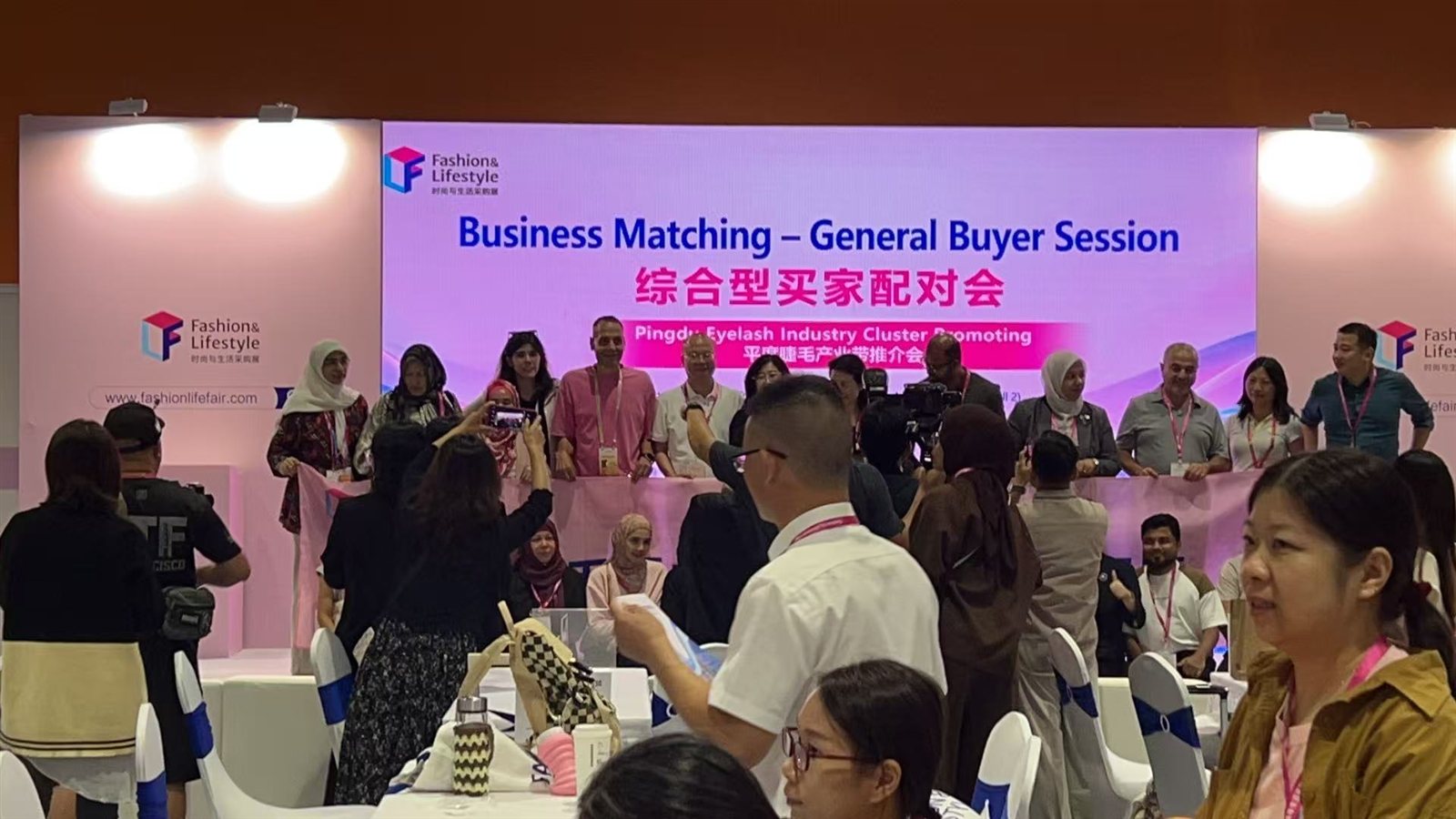
The crowd this season skewed hard towards Central Asia and the CIS — Kazakhstan, Uzbekistan, Russia — which is why our stand carried Russian-language line sheets alongside English, and why we had prepared VK, Telegram and WhatsApp as contact channels before email. The buyers who came with the clearest intent were often the ones who had sourced in China before and were comparing suppliers, not discovering the market.
Two conversations set the tone. A long-standing Ukrainian client spent the afternoon at our stand, picked a stack of styles and left with a quotation list — then continued the same process at other suppliers in other cities, which is exactly what fair buyers do, and exactly why the speed of your first reply decides the order. And a US-based Chinese founder building an American streetwear label asked, before anything else, whether we ship DDP.
1. “What is your MOQ?” — and the question behind it
MOQ was the single most frequent question at the stand. But the question that actually decides whether a programme happens is the one that came right after: per style, per colour, and what the minimum buys you.
Our published answer, stated plainly: custom development from 300 pieces per style, with 7-day sampling. Below that number the honest routes are stock programmes or simplified specs — not a promise. A buyer who hears a number that fits their plan on the stand can plan a range around it; a buyer who hears “flexible” has to guess.
What we tell every buyer to ask any factory — including us — is the same: what is the minimum per style, what does the sample cost and take, and at what quantity does the price step down. If a quotation cannot answer those three lines in writing, it is not a quotation yet.

2. The four styles buyers actually quoted
Across three days, quotation requests clustered into four categories:
- Light-luxury jackets — better shell, better hand-feel, quiet branding; the buyer pays for fabric, not for logos.
- Winter padded coats — the core of the Central Asian order book, where fill weight and shell density decide the price more than the silhouette does.
- Cooling T-shirts — the counter-season surprise of the stand, ordered in November for northern-hemisphere summer programmes.
- Lightweight summer knits — same counter-season logic; buyers lock summer production against winter fair pricing.
The winter-plus-summer mix on one rail is not a contradiction — it is how counter-season buying works. Fair-season quotations are written months ahead of the selling window, so a November buyer is simultaneously planning next summer and the winter after that. A stand that only shows what matches the season outside the window is showing half a range.

3. “Can we change this style?” — the buyers who modified on the spot
The most encouraging behaviour of the season: several buyers did not take a style as fixed. They pulled a garment off the rail, changed it — body length, shell fabric, fill weight, trim package — and wrote the details down at the stand before moving on. That is a buyer who intends to order, and the details they bring are the brief.
What makes such a modification quotable rather than vague, for any manufacturer reading this: the base style number (so the block carries over), the exact change per panel, the fabric swap if any, and the target FOB. “Make it longer, nicer fabric, same price” is a wish. “Body +6 cm, 320T shell instead of the current one, fill unchanged, FOB target unchanged” is a specification — it comes back from sampling in days, not weeks.
This is also why we tell buyers to bring the garment, not just the drawing — a line we have used on this site before, and this season proved it again. A sample on the table ends the fabric conversation in ten minutes.
4. “Can you ship DDP?” — terms moved to the front of the conversation
One buyer — a US-based Chinese founder building an American streetwear brand — asked about DDP before asking a single price. That ordering used to be rare. It is not any more.
Our position, plainly: we quote FOB as the baseline, and DDP where it makes sense — which means the landed cost is calculated forward (freight, duty, clearance) instead of being guessed at the destination port. DDP is a service with real costs attached, and a buyer who asks for it early is a buyer who plans margin properly. The worst answer a factory can give is a fuzzy yes; the useful answer is the cost breakdown behind it.

5. “Where can we see more?” — the showroom answer
A stand shows a slice of a range; a showroom shows the company. Five to six Kazakh buyers, after finishing at the stand, went the same day to our permanent showroom at Room 9055A, 9th Floor, apM Fashion International, Guangzhou, to see the full rail — more styles, fabric library, construction details, and the time to go through them properly.
This is the structural difference between a fair stand and a showroom: the stand runs for three days, the showroom runs all year. Buyers who found us through the fair can book the showroom any week — metro to Pazhou or Xingang East, a short walk from the Canton Fair complex. Bring a tech pack or a garment; leave with a sample plan.

The documents buyers asked for
Across the three days, the requests were about evidence more than capability. The recurring list:
| What buyers asked for | What we hand over | Where it usually breaks |
|---|---|---|
| Company credentials | Business licence, quality-inspection reports, fabric test reports | Reports expired, or issued for a different product category |
| Quotation basis | Written quote: FOB, MOQ, lead time, payment terms, packing, print/embroidery add-ons | Verbal quotes that drift once the order is placed |
| Style modification brief | Base style number + per-panel changes + fabric swap + target FOB | Verbal “improve it” briefs that stall at sampling |
| Sample line data | Hangtag data per style: style no., fabric, composition, sizes, reference price, delivery | Samples carried with no data — the conversation dies after the fair |
| Follow-up channel | WhatsApp / Telegram / VK contact, not just email | Email-only chains that go quiet after week one |
What we are changing after this fair
- Russian-language materials are now standard issue, not preparation. Central Asia and the CIS were the majority of our stand traffic; quotes and line sheets go out in Russian first where the buyer prefers it.
- A 72-hour follow-up rule with A/B/C grading. Every stand conversation is logged on the day (quote requested, sample requested, target price), graded by intent, and answered within 72 hours with the quotation and the actual garment photos — while the trip is still fresh.
- Counter-season rails by default. Cooling T-shirts and light knits keep their place beside padded coats at future fairs, because that is what buyers asked for — both seasons, one conversation.
- Showroom-first routing for serious buyers. The stand answers the first five questions; the apM showroom (Room 9055A, 9th floor) answers the rest — and it is open all year, not three days a season.
Frequently asked questions
What is the MOQ for custom men’s garments at SAZ?
Custom development starts from 300 pieces per style, with 7-day sampling. For smaller programmes, stock styles and simplified specifications are the workable routes — we will say so in writing rather than promise a flexible number.
Can I modify an existing style instead of starting from a tech pack?
Yes — and it is the fastest route to a good sample. Give the base style number, the change per panel, any fabric swap and your target FOB. That is a specification, and sampling follows in days.
Do you work with Central Asian and Russian buyers?
Regularly — this season the majority of our stand traffic was from Central Asia and the CIS, including repeat buyers from Kazakhstan and Ukraine. We work in English, Chinese and Russian, and stay reachable on WhatsApp, Telegram and VK.
Do you ship DDP?
FOB is our baseline quote; DDP is available where it makes sense, with the landed cost broken down (freight, duty, clearance) rather than guessed. Ask for it early — like one streetwear founder did this season — and it becomes part of the margin plan, not a surprise.
Where is the SAZ showroom, and can I visit outside fair season?
Room 9055A, 9th floor, apM Fashion International, Guangzhou — a short distance from the Canton Fair complex (Pazhou or Xingang East metro). It is open year-round by appointment; bring a tech pack or a garment and leave with a sample plan.
Before your next Guangzhou sourcing trip
Turn the five questions above into a one-page brief: target styles and target FOB, MOQ expectation per style and colour, terms (FOB or DDP), modification list against any reference style, and the documents you need back. Send it before the meeting, not during it — we will answer it in writing, including the parts where the honest answer is “not at that quantity” or “not in that fabric”.
Planning the trip? Read our guide to the top men’s garment manufacturers in China for the wider supplier map, then book the showroom: Room 9055A, 9th Floor, apM Fashion International, Guangzhou.

